Wednesday, March 31, 2010

Module 7 - an Exhibition by KASA at the Avenues Mall...


The Kuwait Architectural Students Association (KASA) will be exhibiting at the Avenues Mall in Kuwait from the 4th to the 8th of April, 2010. These events are always worth a visit as, particularly the student work by the various 'creative' faculties at KU, have always something interesting and catalytic to offer...
The opening ceremony will take place on Sunday, April 4, at 7 pm, and is presented under the patronage of Sheikh Talal Al-Fahad Al-Ahmad Al-Sabah...


Sunday, March 28, 2010

Traffic Signs for (the Protection of) Turtles...


Whilst backing up and reviewing some of my older data files I came across some material made during our initial, 2000-01, stay in Kuwait. The included images were, if I remember correctly, designed for the Kuwait Turtle Conservation Project (KWCP) and were intended to be function as warning 'Traffic Signs' regarding various turtle and their habitat related concerns. Not sure if they were ever used in any capacity (we moved back to London soon after completing these) but I remember they were quite fun to do and reseach, and it is a very worthy cause which kind Kuwait would benefit from having more of...


Sunday, March 21, 2010

The Former Finnish 50 Markka/ Mark Bill...

The former Finnish 50 Markka (Mark) bill, showing the profile (front) and a design by (back) the Finnish architect Alvar Aalto...


Before Finland joined the Euro, we had the Finnish 'Markka' ('Mark' in Swedish, Finland's second official language). On its various denominations it, instead of Kings, Queens or rulers, depicted various (self made) cultural figures such as a poet, a philosopher, a writer, a composer, an athlete or, as above, an architect... There's something strangely comforting (in a democratic kind of way) about the idea of honouring individuals based on their congenial achievements rather than their place/ context of birth, military, political or piety based positions...
In the Gulf and Middle-East, who would be the comparable individuals to those depicted on the former Finnish currency..? A question that, in the context of the GCC's not too distant plans for a common currency, isn't too abstract or far fetched. Which individuals or what elements (landscapes, buildings, objects, events) would be simultaneously specific and generic enough to represent the region as a whole..? How should such depictions be distributed amongst the nations - a bill for each GCC member country, or should the bills & coins aim to show something that is common to all the participating nations? Should the currency deal with historical or more current interests (pearl fishing vs. skyscrapers)..?
It's an interesting dilemma as it summarizes many of the issues which the Gulf, as a collective of individual nations, is currently struggling with...

Wednesday, March 17, 2010

Mud Brickin' it in Oman...


A short note to bring to your attention an ongoing project outlined on this blog's sister-blog smArchitecture discussing how to both make as well as (eventually) develop traditional (Omani) mud-bricks... The two related posts can be accessed by clicking here & here...

Saturday, March 13, 2010

A Different Side of Me...


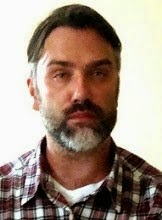
I took the portrait above yesterday at a small local photo-studio. The interesting thing was that I walked in wearing my tattered old 'Camden Market' t-shirt and a pair of worn weekend jeans, and walked out with a picture of me in my Omani best. No change of clothing was involved, as the outfit change was all achieved through the 'magic of Photoshop'... Obviously, technology wise, there's really not much novel about this picture or process. All it requires is a few stored outfits as layers in the aforementioned software and, voila, Bob's your uncle..! However, personally I haven't come across this particular rendition of use of photo manipulation, where the outfit is adjusted to befit a particular cultural norm (these photos are usually used in passports by the locals). This technique works particularly well with the Omani muzzar and dishdasha, as these can be placed in front of the subject. How this would work with a keffiyeh, which also occupies space behind the subject, would require a slightly more laborious process. There's something charming in the applications simplicity and benign deception. It would would be easy (and it's probably already done) to apply the same process to this season couture catwalk collection or Saville Row sartorial contraptions. It probably would, however, to retain the conceptually ascetic spirit of the above photo, require the image to retain the modest frame and context of a passport photo or, at most, a torso shot, as otherwise the deception becomes too apparent. It should be an image that involves a glance rather than proper scrutiny - a picture that captures a quality, a somatic ambiance, rather than performing as an accurate depiction... But, as it stands, for me as a non-Omani the image retains an aspect of novelty and has by contextual default become something closer to a souvenir rather than something practical or useful. Something that's a perfectly acceptable outcome in its own right, as it performs as a mnemonic node that will henceforth represent and remind me of a hot Spring weekend in Nizwa, March 2010...

Saturday, March 6, 2010

First Impressions of the Dubai Metro...

View from my hotel room, showing the Dubai Metro station by the Financial Centre in the foreground...


During a brief visit to Dubai this weekend I had a chance to visit and ride the Dubai Metro for the first time. Why exactly it's referred to as a 'metro' I'm not too sure, as at least on the stretch which I rode, it didn't once go underground. As a matter of fact most of the 'tripping' happened about ten meters above the street level along a monorail laid adjacent to the Sheikh Zayed Road which cuts through and defines the centre of the city. The metro stations in Dubai must be amongst the cleanest stations, of any sort, I've come across, and seem closer perhaps to a amalgamation between a contemporary train station and a hotel reception. It even seemed to have a, call him, 'train-concierege' who came to my aid whilst standing, granted somewhat baffled, in front of the metro map (only a number of the indicated metro-stations are currently in use) and kindly explained the 'what's what' of the Dubai Metro. With his helpful aid I decided to go for the 'bling-bling' option of the Gold class card, which allows one to enter the foremost carriage of a train, simply because I've never before come across 'first class' travel in a metro system. The carriages themselves are somewhat 'experience neutral', with vanilla blue leather seating, accompanied by the soft buzz of the AC system and its own rendition of electronic background muzak... The ride was smooth, and uneventful - easy - just the way a trip on public trasport should be...

How this first proper and more recent regional intervention of public transport pans out remains to be seen. But Dubai has to be applauded for having the foresight to commit to this scale of a collectively beneficial venture which I suspect will eventually 'trickle up' to the more general and higher echelons of society and become a viable (and quicker) means of transport for everyone. How Dubai now deals with the supporting infrastructure, i.e. how to intergrate the other means of transport (busses, taxis, pedestrian traffic) is going to play a key part in determining its ensuing success, but the main task and commitment has already been achieved by this key urban intervention. Dubai's neighbours have a lot of catching up to do...

Above and below - The station by the Financial Centre...


The 'Gold Card' train pass...


The lower, street level, lobby of a station...


View from the 'cockpit' of the front (driverless) carriage...


The interior of the 'Gold Class' carriage - soft leather seating accompanied by the soft buzz of the AC and soothing electronic muzak...

Tuesday, February 23, 2010

The Extraordinary Ordinary - Lines and Patterns in Sand...


Included is a quite substantial chunk (but only a fraction of the total number taken) of photos exploring various, man, critter, wind & water made sand patterns, taken at Qurum Beach in Muscat a short while back. I was surpised about the variety of different conditions and constellations of sand I came across whilst walking too and fro the extended stretch of beach. The quantity of and diversity of sand patterns created by the four aforementioned 'affectors' is truly amazing...


Above and below - Weawed water...


Above and below - Critter & Man made calligraphy...


Tuesday, February 16, 2010

Big Sun at Qurum Beach, Muscat...


A few photos taken last weekend at Qurum beach in Muscat... It was a great day of extended beach-side walks, consecutive cups of decent coffee and private (sketch-book) contemplation... I'll be posting an Extraordinary Ordinary submission (photos of sand-patterns and other relevant paraphernalia taken during the day) in the near future...
I really liked the way the setting sun came out in these (almost black & white) pictures. It reminds me a bit of Olafur Eliasson's work exhibited in the main hall at Tate Modern a few years back...


Sunday, February 7, 2010

Nizwa & Oman...

View from my hotel room in Nizwa...


I'm currently stationed in a city named Nizwa in Oman, where I'm teaching architecture at a local university. Oman is a truly awe inspiring and beautiful place, with expansive date-palm oasis, tall reams of arid mountains flanking extensive horizontal planes of reddish rock, and a monochromatically dressed population that, at least here, a bit over an hours drive from the capital Muscat, consists of women being dressed from head to toe black abayas and the men wearing white dishdashas which are always accompanied by either a distinct conical hat (a kumah) or a turban-like, wrap-around, muzzar. There's a certain benign eloquence to the consistency of the local wear that, in its uniformity, reflects the ascetic qualities of both the rural and urban environments...

At some level Oman is what (before Dubai became 'Dubai') outsiders to the region might have imagined the Middle-East would be, with camels and goats casually occupying the areas adjacents to streets and highways, and traditional, now usually abandoned, mud & wood buildings still announcing their benign presence in the more sparsely populated residential neighbourhoods. If you're planning a trip to the region, Oman should be included and allowed to occupy at least a few days in your travel itenirary...


Some of the adjacent mountain ranges flanking the drive down to Nizwa from Muscat...


A young Omani wearing traditional headgear...


Above and below - Scattered signs of modernity can be seen spot-marking and criss-crossing the arid and ascetic landscape...


The back of a mosque in a residential neighbourhood in Nizwa...


Young Omanis playing ball on a residential street...


'Chillaxing' Omani style...


A traditional door-way found in one of the countless abandoned mud buildings scattered around town...


A small canal delivering fresh water from an oasis to the various residential districts and date-palm farms...


View over Nizwa...

Monday, February 1, 2010

The Extraordinary Ordinary - Gulf Trees...


'Big Bertha' in Salwa, Kuwait...


Apologies for not posting for a while... The excuses are as feeble as they are generic, and I thus blame a lack of access to proper Internet here in Oman, where I'm currently stationed, and a severe case of preoccupation with work related matters...

However, included is an additional submission of Extraordinary Ordinary, introducing this time a set of trees found mainly in Kuwait, but there are also a few examples of trees from elsewhere in the region... Most of the trees included are of the, call it, less 'manicured' type, which often can be found outside the more groomed gardens and fenced areas scattered predominantly around the city's various residential areas... These are trees which mostly have had to, at least partly, fend for themselves (this consideration includes the fake and the semi-dead trees), and can thus be counted within the paradigm of 'local' (bona-fide) authentic Gulf/ Middle-Eastern trees. Their roughness and dusty textures, jagged leaves and often stretched and strained roots become a part of their character and charm...


Dead-tired...


Bowing & Showing respect...


The Three Kings of the Trash heap...


Plastic-Fantastic...


Big Ben...

Fighting Trees...

Hitch-hiking...


Suckling cars...